
The Ultimate Guide to South Africa’s Iconic Predator Hotspot: Seal Island
People generally look up the term “Great White Shark Seal Island” for one primary reason: why are predators that exist in an ocean gathering at a very small island where there is a huge population of seals?
Seal Island in False Bay, South Africa, has gained international recognition for the way sharks behave near it, the amount of marine biological research conducted there, and the opportunity to experience ocean moments you will never forget. There is a lot of science, myth, and fact to examine about the relationship between the great white shark and Seal Island.
Why Is Great White Shark Seal Island In South Africa So Famous?
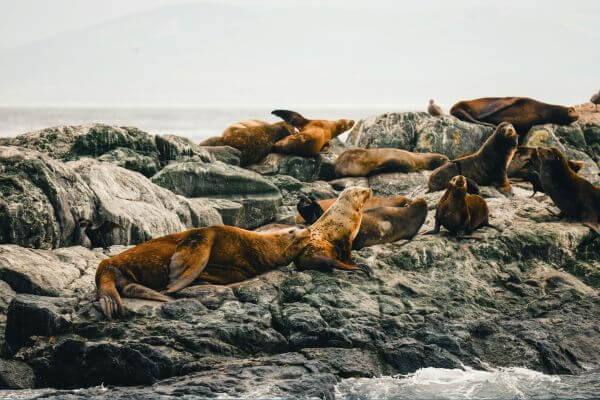
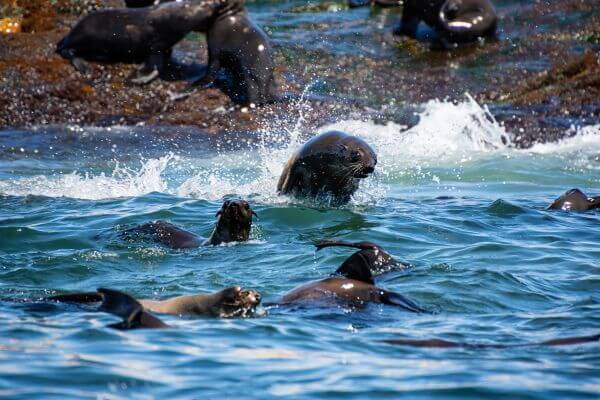
Seal Island is located in False Bay, near Cape Town, South Africa. It is home to thousands of Cape fur seals, creating one of the most active marine feeding zones in the region.
The island became globally recognised because:
- It is one of the most studied great white shark hunting grounds.
- Researchers documented spectacular breaching behaviour here.
- It played a key role in understanding predator-prey relationships in the marine ecosystem.
Scientists, such as those studying the Great white shark, have used Seal Island to better understand how apex predators regulate marine food webs.
Are There Great White Sharks in False Bay?
Yes. Historically, False Bay has been one of the most reliable places in the world to see white sharks.
Why False Bay Attracts White Sharks:
- Large seal colony at Seal Island
- Cold, nutrient-rich Atlantic waters
- Deep channels are ideal for ambush hunting
- Seasonal fish migrations
However, in recent years, shark numbers have fluctuated. Factors believed to influence this include:
- Shifts in prey availability
- Changes in ocean temperature
- Competition from other apex predators
- Natural population movement patterns
White sharks are migratory animals. Their presence can vary seasonally and annually depending on environmental conditions.
Can Great White Sharks Eat Seals?
Absolutely. Seals are one of the primary food sources for adult white sharks.
As apex predators, great whites require:
- High-energy prey
- Large fat reserves
- Efficient hunting strategies
Seals provide:
- High fat content
- Manageable prey size
- Predictable movement patterns around colonies
Young white sharks tend to feed more on fish and smaller sharks. As they grow larger, their diet shifts toward marine mammals, such as seals.
Can a Great White Shark Kill a Seal?
Yes, and they are highly specialised at doing so.
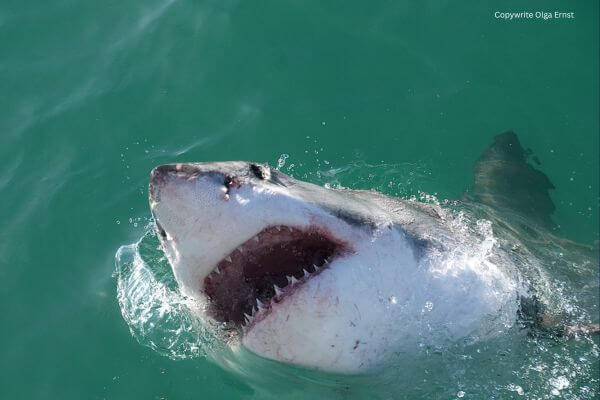
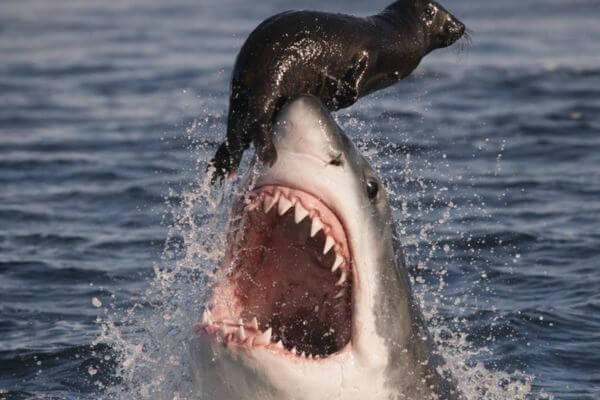
Hunting Strategy of the Great White Shark:
- The shark waits below the seal colony.
- It positions itself in deeper water.
- It uses camouflage from below (countershading).
- It launches upward at high speed.
- In some cases, it breaches the surface completely.
This behaviour became iconic at Seal Island. The energy required to breach is enormous, which is why sharks do not breach at random – it is part of a calculated ambush technique.
This predator-prey relationship between seal and great white shark is a powerful example of natural balance in action.
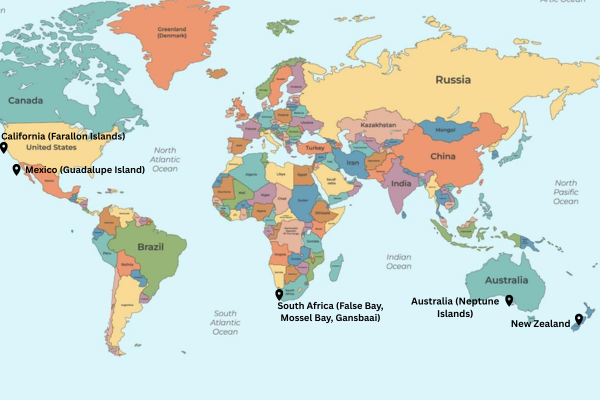
Great White Shark Locations Around the World
While Seal Island is famous, it is not the only white shark hotspot.
Other Well-Known Great White Shark Locations:
- South Africa (False Bay, Mossel Bay, Gansbaai)
- Australia (Neptune Islands)
- California (Farallon Islands)
- Mexico (Guadalupe Island)
- New Zealand (Seal Island)
These locations share similar characteristics:
- Seal or sea lion colonies
- Cold to temperate water
- Deep offshore drop-offs
White sharks travel vast distances, and research into their migration has shown they can cross entire ocean basins.

Great White Seal Island: A Unique Predator-Prey Theatre
Seal Island is not just a hunting ground – it is a living classroom.
Why It’s Ecologically Important:
- White Sharks act as an apex predator
- Shows how energy is transferred within the marine ecosystem
- This supports Marine Biology Research
The seal great white shark interaction highlights how:
- Predators maintain healthy prey populations
- Weaker or injured individuals are often targeted
- Marine ecosystems stay balanced through natural selection
Without predators such as white sharks, seal populations could grow unchecked, affecting fish stocks and broader marine ecosystems.
Seal Island White Sharks: Population Changes Over Time
Seal Island Shark Population Trends
- White shark sightings at Seal Island have been common and fairly predictable for many years.
- In recent years, shark sightings have decreased in some months or seasons.
- Researchers who have worked with this population feel that changing marine conditions may be a contributing factor.
- The predator dynamics of this area have also changed.
It is not necessarily being said that white sharks have left the area, but rather that white sharks are a highly mobile species that can move from one location to another in response to changing marine conditions. Marine ecosystems are always changing; they never remain in a constant state.
Seal Island Great White Shark Tours – What You Should Know
While Seal Island great white shark tours were once popular in False Bay, conservation and ethical considerations are now central to any marine wildlife experience.
Important principles include:
- Respect for natural behaviour
- No interference with hunting activity
- Scientific monitoring
- Education-first approaches
Learning about great white sharks should always prioritise conservation and understanding over sensationalism.
How Seals and Great White Sharks Fit Into the Marine Food Chain
Let’s break down the simplified food chain around Seal Island:
- Phytoplankton (microscopic plants)
- Small fish
- Larger fish
- Cape fur seals
- Great white sharks
Each group above supports the next group below it. As apex predators, Great White Sharks occupy the highest position in their food chain, and there are no predators to fear in the wild (unless they interact with other large marine predators such as killer whales). The structure of the food web maintains a healthy food web and a diverse population of species around Seal Island.
False Bay and the Broader Marine Ecosystem
False Bay is more than just sharks and seals.
It includes:
- Kelp forests
- Rocky reefs
- Migratory fish species
- Diverse seabird populations
The great white shark is simply one piece of a much larger, interconnected marine ecosystem. When one element shifts, the entire system adjusts.
Are Great White Sharks Always at Seal Island?
No. Their ability to be present in the area is based on:
- The water temperature.
- Patterns of seal behaviour.
- Migration cycle of the sharks.
- Oceans’ conditions generally.
- Other Apex predators, such as the killer whale
Wildlife cannot live by an established routine; therefore, studying these animals will teach us that they function on their own schedule.
Why the Great White Shark Seal Island Story Still Matters
Seal Island helped the world understand:
- How white sharks hunt
- How predator-prey relationships function
- How marine research improves conservation
- How dynamic ocean ecosystems really are
For students and ocean enthusiasts, it remains a powerful case study in marine biology.