
The Rig Shark – Small Coastal Hunters of South Africa
Rig sharks are a group of small sharks that are often underappreciated but still play a major role in coastal ecosystems. They have developed a specialised adaptation to live in shallow water, where they hunt for crustaceans, thereby helping to keep coastal ecosystems in balance. Learning about the rig shark provides students, marine enthusiasts, and other curious people with information about the important contributions of all coastal marine species, regardless of their size or drama.
What Is A Rig Shark and Where Does This Shark Species Live?
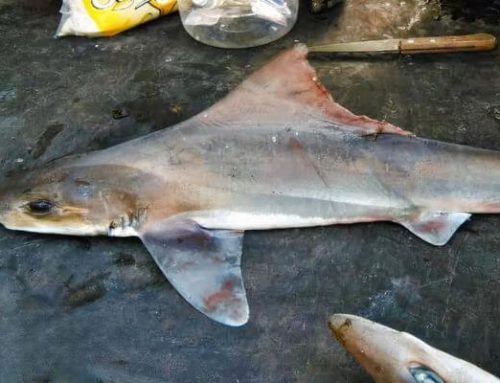
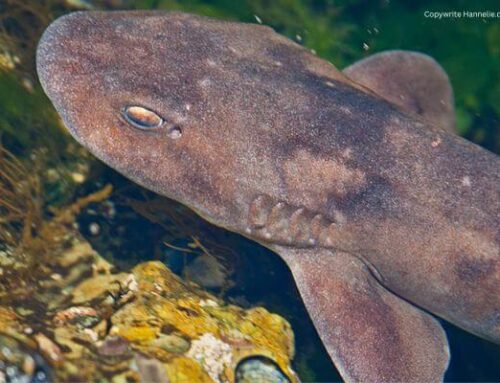
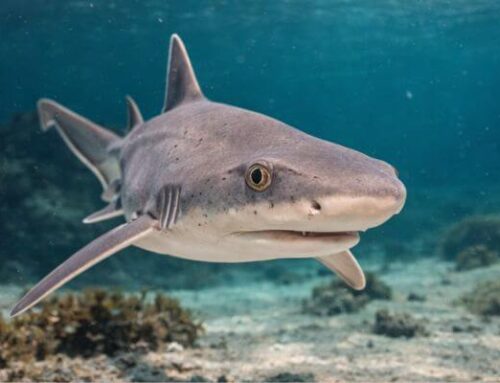
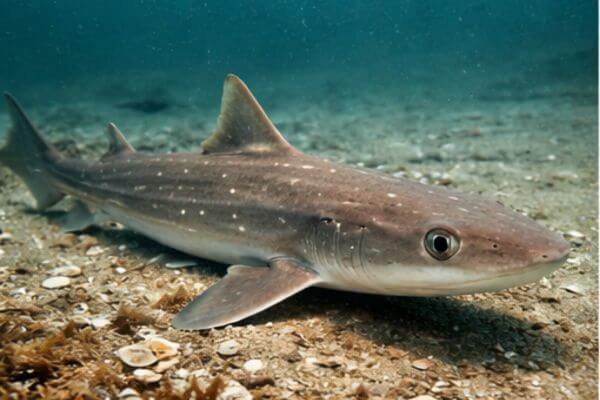
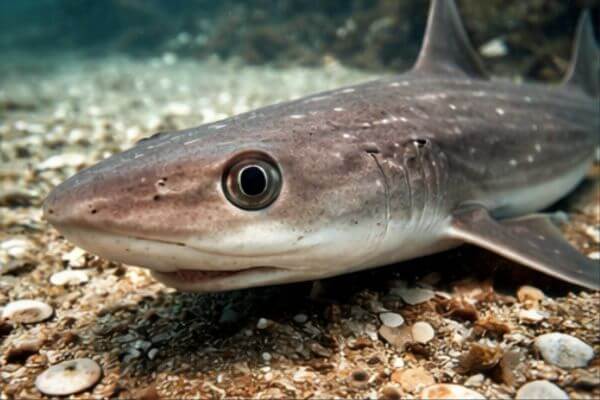
Rig sharks (Mustelus lenticulatus) belong to the smoothhound family (Mustelidae); their specific scientific name is Mustelus lenticulatus. Because these sharks lack large serrated teeth (like those of apex predators such as the great white), they are called smoothhounds.
While rig sharks are often thought to live in New Zealand’s waters, other smoothhound sharks also exist in coastal areas of South Africa. The preferred habitat of these sharks includes shallow coastal waters, sandy seabed areas, estuaries and bays, and continental shelves. Unlike many large predators, which migrate long distances across the open ocean, rig sharks tend to remain closer to land. As a result, they play an important role within coastal marine ecosystems.
What Makes Rig Sharks Different From Apex Predators?
Sharks are commonly thought of as massive apex predators that hunt seals in the open ocean. However, the rig shark is a far cry from this image.
The main ways in which it differs from the common perception of sharks are:
- Size: Rig sharks are generally about 1–1.5 meters in length
- Teeth: Rig sharks have small, flat, crushing teeth
- Diet: Rig sharks primarily feed on crustaceans as opposed to large marine mammals
- Temperament: Most rig sharks do not attack humans; therefore, they tend to be less aggressive towards humans
Because they are not designed to breach the surface or to chase prey rapidly, they are instead highly specialised coastal hunters with adaptations that enable them to capture and consume bottom-dwelling prey.
Therefore, they illustrate the diversity of sharks: not all occupy top positions in their respective ecosystems; many are mid-level predators that perform important ecological functions.
Diet Of A Rig Shark
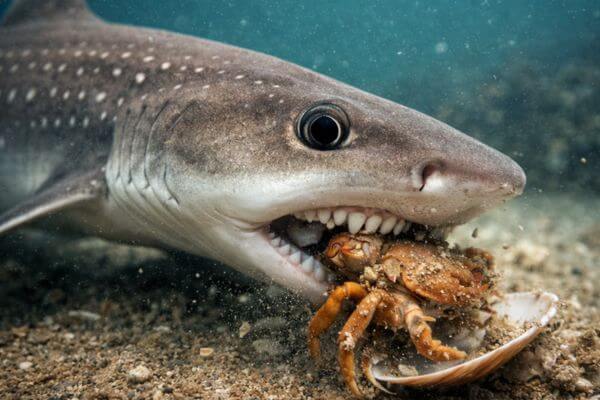
A rig shark has plate-like crushing teeth that are ideal for breaking up hard shells from its prey.
Its main food source consists of:
- Crustacean Crabs
- Shrimp
- Lobster
- Fish (small, bottom-dwelling)
Rather than chase after quickly moving prey, a Rig Shark patrols the sandy seafloor. Using both its powerful sense of smell and electroreception, it can detect movements under the sand and uncover hidden crustaceans.
The way it feeds helps control crab populations and keep coastal ecosystems stable.
How Big Do Rig Sharks Get?
Rig sharks range from 1 to 1.5 metres in length, with an average weight of 10-15 kg. The Rig shark has a slender, streamlined body that enables it to move efficiently in the shallow coastal waters where it resides, reducing its potential danger to humans. It is estimated that Rig sharks live approximately 10-15 years.
Are Rig Sharks Dangerous To Humans?
One of the most frequently asked questions among students is whether smaller shark species are harmful.
The Rig shark is not considered dangerous to humans.
Reasons are:
- Their very small crushing teeth are made for eating crabs, not larger prey.
- They don’t display aggressive hunting behaviour towards swimmers.
- Negative interaction records are virtually nonexistent.
As with all sharks, they are generally fearful and tend to avoid unfamiliar large animals (such as humans).
Knowing this can help replace irrational fears with an understanding that shows you respect for marine life.
Rig Sharks and Coastal Ecosystems: Why Are They Important?
Although Rig Sharks are not top predators, they play an important role in their ecological niche.
The function of the Rig Shark includes:
- Predation on crustaceans (crabs, etc.)
- Maintenance of equilibrium in estuaries
- Support for the diversity of species in coastal zones
When Mid-Level Predators die out, prey species can rapidly increase in number, potentially disrupting food chains and causing long-term harm to sensitive marine ecosystems.
Regardless of size, all sharks help maintain stability in marine ecosystems.
This resource provides a global view of the current conservation status of marine species.
How Do Rig Sharks Reproduce?
Rig sharks are ovoviviparous (eggs develop inside the mother’s body), and then live pups are born. This reproductive method provides greater protection than external egg laying.
Similar to other shark species:
- They mature slowly.
- They have small litter sizes.
- They need a stable environment to survive.
Because of these characteristics, they are particularly vulnerable to being over-fished, unless proper management is in place.
How Can You Identify a Rig Shark?
Identifying a rig shark involves looking for specific features:
- Bronze-grey colouring
- Slender body
- Two dorsal fins of similar size
- Smooth skin texture
- Small crushing teeth
They lack the dramatic triangular teeth of species like the Blue Shark. This makes them visually less intimidating but equally fascinating from a biological perspective.
Do Rig Sharks Migrate?
Rig sharks can move seasonally in response to several environmental or biological factors, including:
- Changes in water temperature
- The location where they are going to breed
- Availability of food
In some locations, large numbers of smoothhounds will come together during certain times of the year to congregate.
Shark movement helps them by:
- Locating ideal breeding sites
- Finding zones that are rich with food
- Maintaining a healthy population genetics
Studying how sharks migrate is an area marine biologists continue to investigate.
Rig Shark vs Other Coastal Shark Species
Many coastal shark species exist in South Africa’s coastline. These include:
- Bronze whaler sharks
- Ragged-tooth sharks
- Smoothhound
- Smaller catshark species
Compared to other larger coastal predator species, rig sharks:
- Tend to stay near the bottom of a sand substrate.
- Primarily feed on invertebrates.
- They are much less apparent to divers.
These species, although they do not display the same excitement as some of the more obvious (and larger) shark species, demonstrate the same ecological value.
Not all shark species are apex predators; however, each species is important in its own right. Studying the smaller species of coastal sharks provides information on:
- Coastal habitat protection
- Marine biodiversity
- Ocean Stewardship
- Dynamics within a food web
Conservation Decisions are made based upon understanding the role that species play in their ecosystem.
Why Learning About The Rig Shark Matters
Not all shark species are apex predators; however, each species is important in its own right. Studying the smaller species of coastal sharks provides information on:
- Coastal habitat protection
- Marine biodiversity
- Ocean Stewardship
- Dynamics within a food web
Conservation Decisions are made based upon understanding the role that species play in their ecosystem.
Can You See Coastal Sharks In Mossel Bay?
While Rig Sharks (bottom dwellers) are generally stealthier than Great Whites, Mossel Bay has a reputation worldwide as a place where you can see an incredible variety of marine life. Encounters other predator species, such as the Greyhound Shark in Mossel Bay.
There are possibilities in these waters, but the same environment that creates a home for apex predators also provides homes for many smaller coastal species, such as smoothhounds and other interesting marine species.
As part of South Africa’s most biologically diverse marine area, the Garden Route, the area around Mossel Bay offers students, marine enthusiasts and adventure seekers a great opportunity to learn about ocean wildlife in a real-world setting.
Rig Sharks and Ocean Conservation
Sharks like rig sharks make people think about how the ocean is affected as much by small coastal fish that swim below the waves as by the big top predators that get all the attention. No matter what size or type of shark you are talking about, they all play a part in keeping the balance of marine ecosystems intact. If learning about rig sharks has piqued your interest in the many different types of sharks that can be found along the Garden Route, find out more about the great marine life we have here by looking at our main shark diving Mossel Bay page. Here you will find an opportunity to experience real ocean adventures through the many science and conservation stories that take place right on our doorstep.