
Blue Shark: The Ocean’s Elegant Wanderer
Blue Shark is one of the most widespread and recognisable sharks in the world’s oceans, known for its striking blue colour, slender body, and long-distance migrations. Found mainly in open, deep waters, the Blue shark is a highly adaptable predator that plays an important role in ocean ecosystems. Curious by nature yet generally calm, this species spends its life roaming vast pelagic zones in search of squid and small fish, making it a true symbol of life in the open ocean.
What Is A Blue Shark?
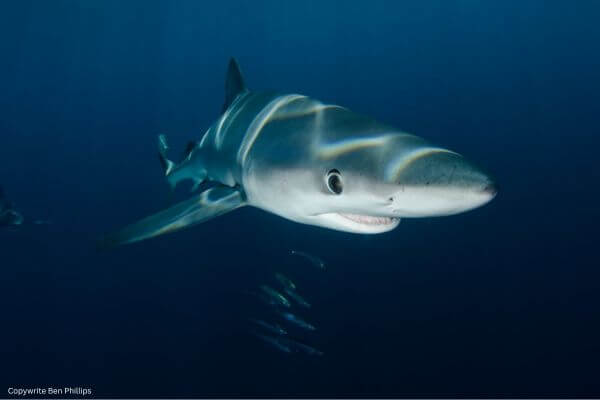
A Blue shark is a sleek, fast-swimming shark that lives in the open ocean around the world. It is easily recognised by its deep blue back, long pointed snout, and slender body, which help it blend into the water and move efficiently over long distances. Blue sharks mainly feed on squid and small fish, are highly migratory, and are generally curious but not dangerous to humans.
Why Is A Blue Shark Blue?
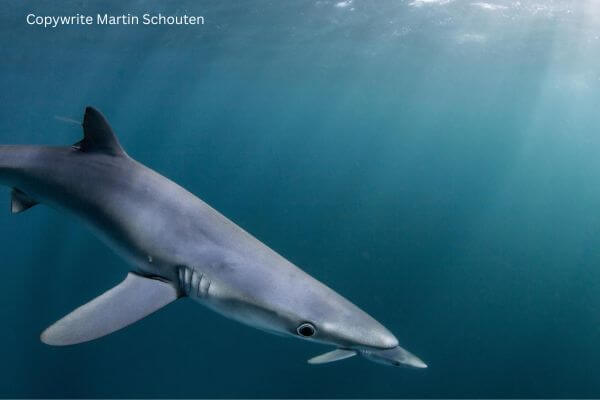
The colouration comes from tiny structural components of their skin, which cause them to diffract light and reflect the shorter, or “blue”, wavelengths of light better than other colours. The colouration is the result of a physical process rather than a pigment, such as those used in paints.
When viewed from the surface, the ocean typically appears deep blue because of the short wavelengths of light reflected by water molecules. Blue sharks have a blue-grey dorsal side, which helps them blend into the surrounding water and makes them less visible to their prey and predators. The ventral side of the shark is opaque white, blending well with the sunlit waters at the surface. The combination of these two colours is known as countershading and is characteristic of many species of open-water marine animals.
Blue sharks are pelagic species that inhabit the open ocean and tend to avoid areas near shore. With no place to hide in the open waters, the ability of the blue shark to blend into the blue-colored water provides a good defence against potential predators.
The same blue-grey tone provides camouflage for blue sharks as they hunt their prey (such as squid and small fish). By remaining relatively invisible, this blue-grey colouration enables the shark to approach its prey undetected and ambush them.
Where Does A Blue Shark Live?
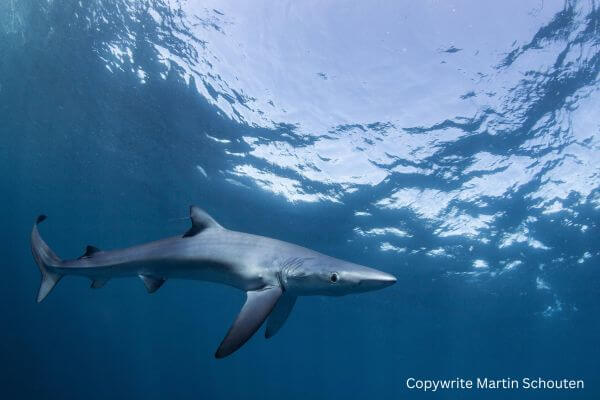
The Blue Shark is probably the widest-ranging species of shark. Most of the time, Blue Sharks are found in open-ocean areas away from land.
Open ocean environments are preferred by Blue Sharks because they provide ample space to swim freely, unlike near reef systems or coastal areas.
In addition to preferring open-ocean habitats, Blue Sharks have been known to inhabit warm and cool tropical and temperate seas worldwide. Blue Sharks are typically found in water temperatures ranging approximately between 7-21°C. This adaptability to a variety of different water temperatures is part of what has allowed Blue Sharks to migrate across such vast geographic areas.
Blue Sharks can be found in many parts of the world, including:
- Atlantic Ocean
- Pacific Ocean
- Indian Ocean
- Mediterranean Sea
Blue Sharks are found in both the Northern Hemisphere and the Southern Hemisphere.
As with other species of sharks, Blue Sharks also exhibit high levels of migration. Blue Sharks often travel long distances across entire oceans in search of food, during seasonal migrations, and in pursuit of warmer or cooler water.
End of Text
Blue Shark Size and Physical Features
Blue sharks are considered large ocean predators, though they are slimmer than many people expect.
Average size:
- Length: 2.5–3.5 metres
- Weight: 80–200 kg
Key physical traits:
- Long pectoral fins help glide across wide spaces
- Eyes are big and built for dim light, tuned deep
- Pointed, jagged teeth built for gripping prey
What Do Blue Sharks Eat?
The Blue Shark’s main source of food is squid that comprises most of its diet. They eat a variety of small to large fish including Mackerel, Sardines, and Anchovies. In addition to these sources, they prey on smaller sharks, rays, crustaceans, and sometimes even seabirds resting at the ocean surface. Blue Sharks hunt in an opportunistic manner, so they can adjust their hunting based on availability; therefore, it is not uncommon for them to scavenge when there are dead fish or whales for example.
Are Blue Sharks Dangerous to Humans?
The Blue Shark is not a dangerous animal to humans. While they can be quite curious, Blue Sharks sometimes get close to boats and divers, but in general, they are naturally shy and do not want to confront other animals (including humans). In the recorded history of Blue Shark interactions with humans, they have been extremely rare, usually under unusual circumstances, such as while fishing or when there is something in the water for them to eat. Because Blue Sharks live in open-ocean environments, they rarely come into contact with people, and if they did, they would probably be more interested in catching squid or fish than in eating a person.
Blue Shark Behaviour and Personality
They swim at an average, non-aggressive pace (slow) due to their social nature, and they tend to be solitary animals (sometimes with other loose sharks). Blue sharks can also display curiosity towards humans and are generally seen as less aggressive than most of the world’s shark population; they have been observed approaching divers and various objects for investigation.
Are Blue Sharks Endangered?
Although blue sharks are not currently classified as endangered, they face growing threats.
Primary Threats to Blue Sharks
- Overfishing
- Bycatch in longline fisheries
- Finning and unsustainable fishing practices
Because they roam across international waters, protecting blue sharks requires global cooperation, not just local conservation efforts.
How Do Blue Sharks Reproduce?
The Blue shark reproduces through live birth and has one of the highest reproductive rates among sharks:
- Blue sharks are viviparous, meaning pups develop inside the mother and are born alive
- Females can give birth to 20–50 pups at a time, sometimes even more
- The gestation period lasts about 9–12 months
- Pups are born in open-ocean nursery areas, far from the coast
- This high number of pups helps the species survive despite heavy ocean pressures
How Far Do Blue Sharks Migrate?
The Blue shark is a long-distance traveller capable of migrating thousands of kilometres across entire ocean basins. These sharks follow food sources, seasonal temperature changes, and major ocean currents, often crossing from one side of an ocean to the other. Their impressive migration ability is one reason blue sharks are found in so many parts of the world’s open oceans.
Why Blue Sharks Matter to Ocean Ecosystems
The Blue shark plays an important role in keeping the ocean balanced:
- Help control populations of squid and small fish
- Support healthy food chains in open-ocean ecosystems
- Remove weak or sick prey, improving overall species health
- Contribute to nutrient cycling through wide-ranging movement
- Act as an indicator species for ocean health
How Scientists Study Blue Sharks
Marine researchers use several methods to study blue sharks:
- Satellite tagging
- Acoustic tracking
- Observation during offshore research trips
When it comes to learning about sharks worldwide, many turn to credible sources like National Geographic – known for clear, research-backed facts about different species and their ocean environments.
Why Learning About Blue Sharks Changes Perceptions
Knowing more about creatures such as the blue shark shifts guesswork into clarity. Far from random attackers, these sharks operate with precision, shaped by millions of years of evolution in the ocean. Their role goes beyond survival; it matters quietly beneath waves.
What helps protect oceans often starts in classrooms; learning shapes how people think about the ocean and it’s inhabitants.
Explore More About Sharks in South African Waters
Cape Town offers magnificent blue shark diving in the pelagic off near Simon’s Town. Contact us to book your trip!