
The Ultimate Guide to the Ocean’s Longest-Living Predator: The Greenland Shark
Greenland sharks are mysterious, unique creatures of our oceans. This huge, slow-swimming shark lives in the cold waters under the ice at the top of the world, specifically in the Arctic. It fascinates scientists and anyone interested in the ocean, mainly because it is thought to be the oldest living vertebrate (vertebrates include humans, sharks, fish, etc.), with estimates suggesting it could live up to about 400 years.
What Is a Greenland Shark?
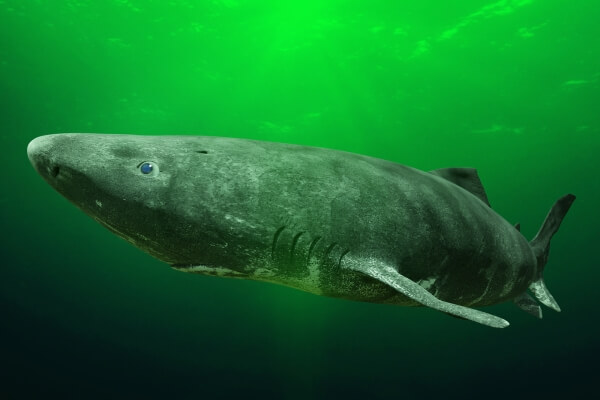
The Greenland Shark (Somniosus Microcephalus) is an enormous, glacially slow, deep-water predator that lives in Arctic cold water. This shark is also a sleeper shark, known for its slow speed and ability to live in extreme cold and extreme depths. This species is built to be efficient and durable rather than fast or able to capture prey quickly.
Where Do Greenland Sharks Live?
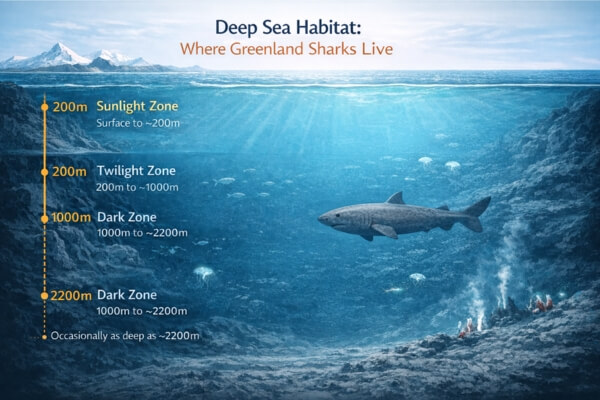
How Deep Do Greenland Sharks Live?
Greenland sharks have adapted to live in some of the harshest conditions on Earth; they can survive in:
- Deep-sea trenches down to about 1200 m
- Dark, extremely pressurised waters
A recent sighting shows that Greenland sharks can be active at depths as low as approximately 2200 meters.
How Big Do Greenland Sharks Get?
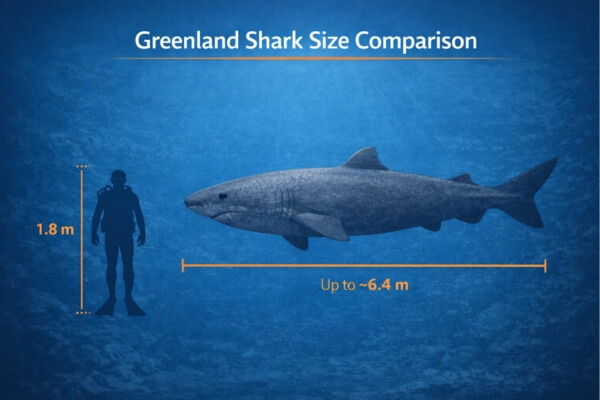
Greenland sharks are among the largest shark species in the world’s oceans.
Common size range:
- Average length: Between 2.5 m and 6.4 meters
- Maximum measured: Approximately ~7 meters long.
- Typically, they weigh up to 1,400 kilograms.
Their very large body allows them to swim slowly, which helps conserve energy. Their thick, large body also provides thermal inertia.
Greenland Shark vs Other Sharks
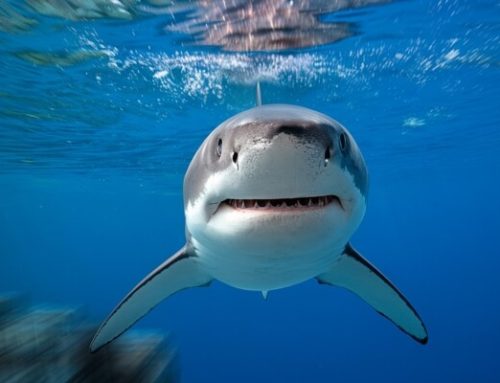
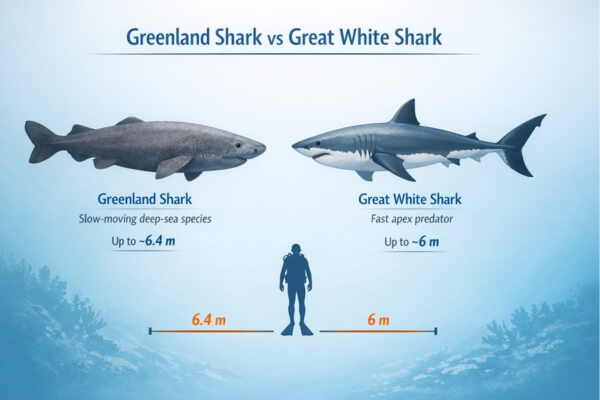
Compared to most other shark species, such as the Great White Shark (Carcharodon carcharias), the Greenland shark (Somniosus microcephalus) has several important similarities and differences.
The main differences include:
- Speed: it moves at an extremely slow pace compared to all other shark species
- Habitat: the Greenland Shark lives in deep Arctic waters rather than along coastlines. The Great White Sharks live in temperate, tropical coastal and open-ocean waters.
- Lifespan: The lifespan of the Greenland shark far exceeds that of any known shark species
- Behaviour: The Greenland shark often scavenges food rather than hunts for prey.
Greenland Shark Lifespan Explained
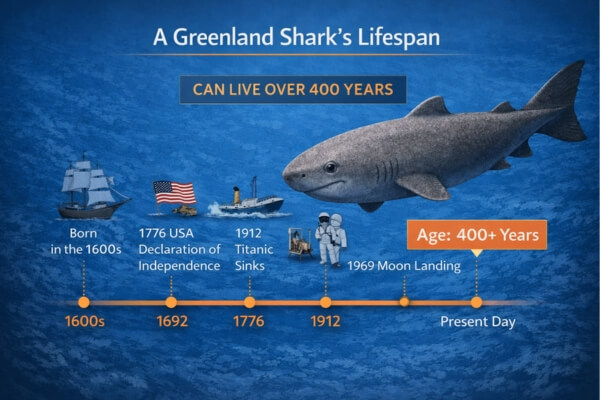
The Greenland shark’s lifespan is among the most remarkable in nature.
Scientific research has shown that:
- Minimum verified age (lifespan): 272 years
- Approximate estimated age (of the larger size classes): up to about 400 years
Some Greenland Sharks living now were born in the 1600s, long before the United States was founded or the light bulb was invented; therefore, they are the longest-lived vertebrate animals on record.
What Do Greenland Sharks Eat?
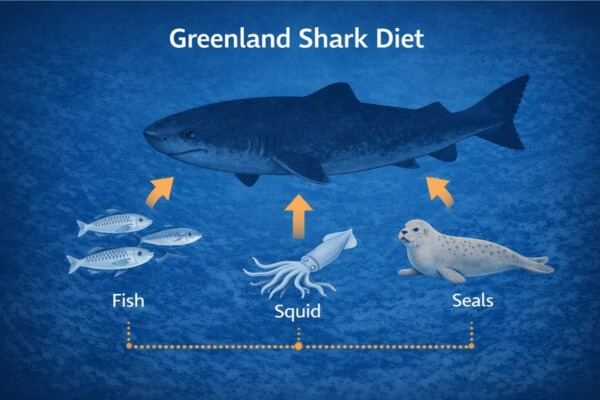
Greenland sharks feed opportunistically.
They eat:
- Fish
- Squid
- Carrion (the dead bodies of other creatures)
- Marine mammals like seals
They do not move fast enough to chase after their food, but scientists have discovered that they are able to actively find their food with an extremely strong sense of smell; thus, they likely ambush the food when it is at rest, when the food is trapped in ice, or when the food is not capable of defending itself.
Why Are Greenland Sharks Often Blind?
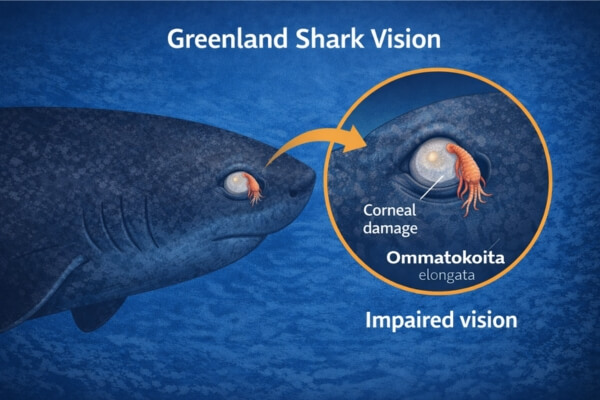
Most adult Greenland sharks have an eye-attaching parasite (Ommatokoita elongata).
- The organisms grow onto the cornea by forming scars on its surface.
- The parasites create scars that do limit vision; they don’t eliminate it.
- Research indicates the sharks’ visual systems have evolved genetically to support long-term survival in low-light conditions.
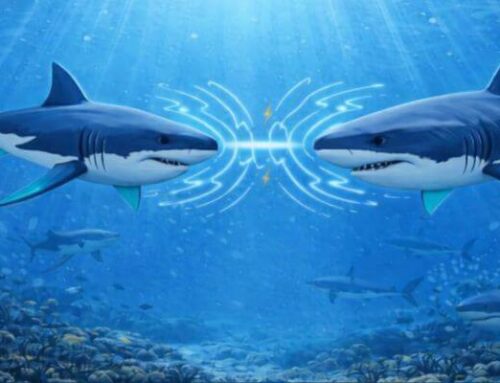
Sharks don’t need to see when they can use a powerful sense of smell and electroreception to find food or avoid danger in such an energy-poor, visually limited environment.

Why Is Greenland Shark Meat Fermented?
In Iceland, people traditionally eat Greenland shark meat in a dish called Hákarl. The fermentation that occurs during processing breaks down toxic compounds in the meat. The toxins can also make it unsafe to consume.
How Is the Greenland Shark’s Age Determined?
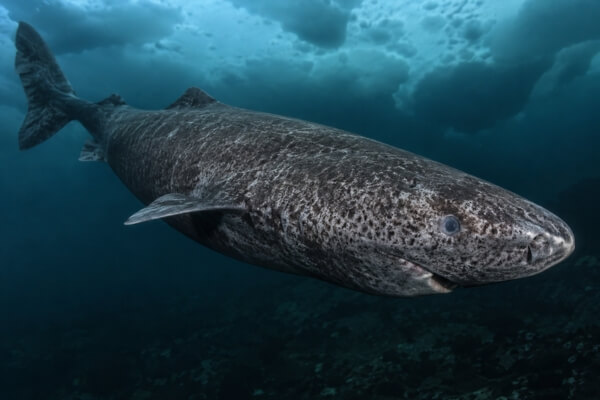
They lack bones or other structures that would help researchers determine their actual age.
In order to research the actual lifespan of a Greenland shark, scientists use methods of analysis based on:
- Eye lens protein analysis
- Radiocarbon dating
- Growth rate comparison
This has been confirmed in part by research from the Smithsonian Institution.
Why Do Greenland Sharks Live So Long?
Greenland sharks have a unique set of biological factors that allow them to live so long:
- Low metabolism in very cold water
- Very low activity levels
- Delayed maturity and growth
- Few natural predators
Their survival strategy relies on slow, long-term survival rather than rapid growth.
How Do Greenland Sharks Survive Extreme Arctic Conditions?
Greenland sharks are adapted for life in one of the most hostile environments on Earth.
They survive:
- Extremely cold temperatures
- High pressure at depth
- Specialised blood chemistry
Key features of their adaptation include:
- Energy-efficient movement system
- Low metabolic rate
- Hyper-developed sense of smell and electroreception (to compensate for parasite-induced blindness)
How Fast Do Greenland Sharks Swim?
Slow-moving shark species, including Greenland sharks, have a low average swimming speed of approximately 1.2 kilometres per hour. They can still hunt effectively by using stealth and taking advantage of feeding opportunities.
How Often Do Greenland Sharks Eat?
Because of a slow rate of metabolism (a low metabolic rate):
- Greenland Sharks can live for extended amounts of time without eating
- While they can survive entirely on small, low-energy amounts of fish, eating a high-energy food source lets them go months without eating again.
Are Greenland Sharks Dangerous to Humans?
Greenland sharks are not considered a threat to humans.
- Zero Threat (Scientifically Documented): To date, there have been zero reported attacks from Greenland Sharks on humans.
- Isolated Environment: The cold, dark deep-ocean environment means they rarely see people swimming or diving.
- Physically Inhibited by Movement: They swim too slowly for any potential threats to an individual.
Can a Greenland Shark Kill You?
- No confirmed attacks have been reported.
- Greenland sharks have had little interaction with humans because they live far from populated coastal regions.
Greenland sharks are generally considered among the least threatening large shark species.
Are Greenland Sharks Toxic or Poisonous?
Yes, fresh Greenland shark meat contains toxins (trimethylamine oxide (TMAO)) that can cause a variety of symptoms, including:
- Nausea
- Dizziness
- Intoxication-like effects
What Does Greenland Shark Taste Like?
Because it is fermented, hákarl has a strong ammonia odour. It also has an extremely powerful, acquired taste.
The Texture: Often described as rubbery, chewy, or like an oily, dense cheese.
Flavour Characteristics: Although the smell of Ammonia can be overwhelming at times, the flavour itself is relatively mild but also extremely complex. Extremely savoury, extremely fishy, with a sharp, hot, somewhat burning, alcohol-like aftertaste that lingers at the back of your mouth for quite some time.
Tradition: Due to how strong the flavours are, Icelanders have traditionally served this dish cut into small, cube-shaped bites on a toothpick, immediately followed by a shot of Brennivin (also known as “Black Death” due to its potency) to assist in washing away the burning sensation left from eating Harðfiskur.
How Do Greenland Sharks Reproduce?
Research suggests Greenland sharks may be ovoviviparous, meaning they produce eggs that grow and hatch inside the mother.
Why Do Greenland Sharks Reproduce So Slowly?
They have what is believed to be the longest reproductive cycle of all animals in the world.
- It takes approximately 150 years for a Greenland shark to reach sexual maturity.
- Greenland sharks give birth to large litters (with records of up to 57 pups), more than other sharks but far fewer than bony sharks.
Because of this slow development and relatively small litter sizes, the Greenland shark population will likely take many generations to recover.
How Long Is Their Gestation Period?
Although the exact time frame for the Greenland Shark’s gestational cycle has never been directly documented in the wild, based on its extremely slow rate of growth and estimates from scientific metabolic models, researchers estimate the gestational cycle may take anywhere from 8-18 years. If true, that would be long enough to place the Greenland Shark at or near the top of all known pregnancies among animals.
How Many Babies Do Greenland Sharks Have?
Historical Semiclosed Observations: Early observations came from rare sightings of pregnant individuals. These early observers reported very low pup counts, with an average litter of around ten pups.
Scientific Re-evaluation (21st Century): It wasn’t until 2020, when researchers studied ovarian data, that they found mature females produce hundreds of large eggs.
Scientists have since revised estimates for how many pups a pregnant individual can actually carry. The actual number may range between 200 and 324 pups, depending on the mother’s body length/size.
Reproductive Output: In addition to producing multiple pups during each reproductive cycle, scientists also believe one female will continue to reproduce over its long lifespan.
When Do Greenland Sharks Reach Maturity?
Sexual maturation for Greenland sharks occurs at approximately 150 years old.
How Many Greenland Sharks Are Left in the World?
Scientists have never been able to determine how many of these sharks exist because they can only be studied with great difficulty in darkness and cold water at depths up to 2200 meters. While the overall number is hard to estimate, the population has declined significantly due to historical overfishing for their liver oil and current commercial netting. The International Union for Conservation of Nature (IUCN) estimates that Greenland sharks are killed at about 3500 per year as bycatch in commercial fisheries.
Are Greenland Sharks Endangered?
The Greenland shark is currently classified as a threatened species (Vulnerable).
The main factors contributing to its threatened status are:
- The accidental catch of these animals with fishing equipment
- Climate Change
- Extremely low reproductive rate.
Are Greenland Sharks Rare?
Although this species is common across the vast cold northern oceans, humans have never observed it because sightings are extremely rare. This may be because it can live in the darkest water (down to 2200 m) and because it lives in extremely remote areas.
Will Greenland Sharks Go Extinct?
Although the species does not face an immediate extinction event, it reproduces very slowly. This slow reproduction makes the animal highly susceptible to population declines, and it could take hundreds of years to recover from any population loss.
How Often Are Greenland Sharks Seen?
Mostly Unknown to Everyone Else:
- This animal prefers to keep so much water above its head, so swimmers, divers, and the general public rarely encounter them.
- Scientists do catch them now and then during specific deep-sea expeditions when they use specialised equipment like baited remote underwater video units (BRUVS) or deep-dive submarines.
The people who see them most often, however, are commercial deep-sea fishermen, who catch thousands each year as “by-catch” while fishing with large nets at extreme depths.
Who Discovered the Greenland Shark?
The Arctic’s indigenous peoples (such as the Inuit) have known about and used the shark for thousands of years, as shown by passing down knowledge of the animal through oral tradition before European scientists formally named and described it in the 19th century. Naturalists formally named the shark: the species was identified in the early 19th century, with the name assigned in 1801 and a fuller description provided in 1815. Modern science has studied the species for over two centuries. Yet, it remains one of the least well-understood large marine animals on Earth because of its remote, deep-water habitat.
Why Are Greenland Sharks So Unique?
- Its extremely long lifespan
- Its ability to thrive in harsh environments
- Its slow yet highly efficient use of energy
- A behaviour that is nearly always unobserved
Discover More About South Africa’s Sharks and Tidal Pool Sharks
The Greenland Shark is a phenomenal example of the ocean’s secrets. This ancient predator lives quietly for decades in the Arctic’s icy waters. Because of its enormous age, slow-moving lifestyle, and unique adaptations, the Greenland Shark is truly one of Earth’s most amazing creatures. Although you will never see a Greenland Shark off the coast of South Africa, there are many ways to view sharks in their habitat. Experience the thrill of seeing these incredible predators up close on Mossel Bay shark dives, and learn about the diverse marine life along the Garden Route.