
The Secretive Little Dark Shyshark of South Africa’s Coast
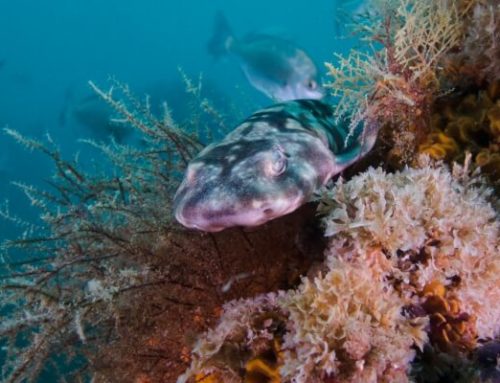
The dark shyshark is one of the lesser-known species of sharks found in South African waters and also one of its most fascinating. In contrast to many of the larger predators (such as the great whites), which are always shown as being top predators on documentaries, the shyshark is very much a bottom feeder and is rarely seen by humans, as it resides along the lower parts of the reef and kelp forest, where it is well camouflaged.
While the dark shyshark will not be the largest of the sharks, nor can it hunt prey as quickly as open-ocean hunters, it does play a vital role in maintaining the ecological balance of the coastal ecosystem. What exactly sets the shyshark apart from other species?

What Is A Dark Shyshark?
This dark shyshark (Haploblepharus pictus) is a relatively small species of catshark (a member of the family Scyliorhinidae), which is generally a small, bottom-dwelling shark. They are unique to the coastal region of South Africa and have an average maximum length of approximately 60 cm.
Dark shysharks have a slender, elongated body that is typically dark brown to grey. There may be scattered, darker saddles or blotches on their bodies. Dark shysharks inhabit only shallow coastal areas.
Because they are endemic to South Africa, the dark shyshark is also significant for biodiversity research on local marine ecosystems.
Where Does The Dark Shyshark Live Along The South African Coast?
Dark Shysharks live in shallow water in temperate coastal zones at depths that range from:
- 0 – 35 meters
- Rocky reefs
- Kelp forests
- Sandy areas located between reef systems
The combination of shelter and foraging opportunities provided by these environments enables the shyshark to survive and thrive. The same type of reef habitat found along the Garden Route and Western Cape coasts (including Mossel Bay) also supports a wide variety of marine species that live on or around the seafloor.
As opposed to other pelagic sharks, which can be found throughout much of the world’s oceans, shysharks are limited to being close to the bottom of the ocean, where they use their ability to blend into their surroundings and the structural features of the environment to obtain food, as opposed to relying upon speed.

Why Are They Called Dark “Shy” Sharks?
One of the most unique characteristics of the dark shyshark is how it defends itself. The dark shyshark curls up in a tight circle (almost like a doughnut) when it feels threatened. It will then place its head in front of its body, using its tail to protect its vulnerable parts and make it harder for a predator to reach them. It is this defensive behaviour that gives the dark shyshark the name “shyshark.” Unlike many apex predators, which defend themselves by being aggressive, the shyshark has developed strategies that use its body position and curling to remain unharmed.
What Does the Dark Shyshark Eat?
The Dark Shyshark is a small coastal predator that feeds primarily on:
- Small crustaceans
- Marine worms
- Small bony fish
- Invertebrates found within the crevices of reefs
Dark Shysharks are nocturnal predators and, as such, use their highly developed senses to locate prey on the seafloor at night. Electroreception is also important to this species, as it is to other shark species. Dark Shysharks have developed specialised sensory organs known as ampullae of Lorenzini, which allow them to detect minute electrical signals produced by the bodies of other living animals (prey).
How Do Dark Shyshark Reproduce?
Like many Catsharks, the Dark Shyshark is an oviparous species that lays eggs.
Female Dark Shysharks will produce:
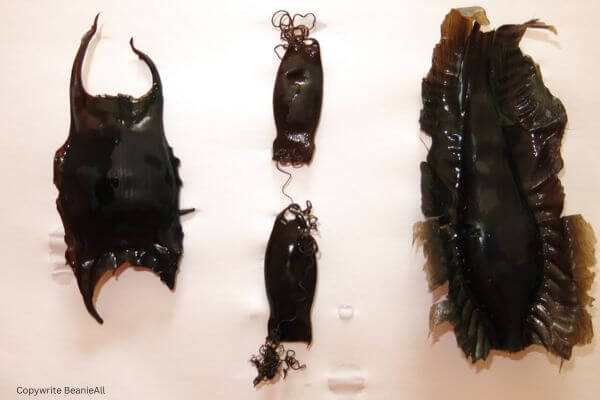
- Egg cases (also referred to as “Mermaids’ Purses”)
- Eggs attached to reefs or rock formations
- Embryos that develop outside the mother’s body
These egg cases are often found on beaches after storms wash them ashore, providing scientists with a valuable opportunity to study shark populations in marine environments.
Is This Small Shark Species An Endangered Species?
The current listing for the Dark Shyshark (least concern) does not necessarily imply that this species is exempt from being threatened.
These are some of the primary risk factors:
- Habitat loss/degradation
- Pollution along coasts
- Entanglement in commercial or recreational fishing gear by accident
- Climate-driven changes to marine ecosystems
Because the species is endemic to South Africa, a significant shift in environmental conditions along the coastline would likely adversely affect it.
How Does The Dark Shyshark Compare To Larger Ocean Predators?
It can be easy to view sharks simply as very strong predators at the top of the food chain (like the great white). Still, there is significant variation among shark species in their physical characteristics, behaviour, and ecological roles.
In comparison with larger, more predatory sharks that live in the open ocean, the dark shyshark differs in:
- Size
- Habitat location (reefs)
- Survival method (defensively instead of aggressively)
- Food source (small benthic animals)
These differences illustrate an important aspect of marine ecology: sharks come in many forms and are not all the same. Some dominate the open ocean, while others help maintain reef health by sustaining ecological balance.
The Dark Shyshark And South Africa’s Marine Heritage
The coastal regions of South Africa are a hotspot for marine biodiversity, supporting research and conservation efforts and providing opportunities for environmental education. Although the larger pelagic predators receive most of the attention, the many smaller coastal species help demonstrate how full of surprises the ocean can be.
Discover The Ocean Beyond The Headlines
The dark shyshark is unlikely to become an iconic or well-known creature; however, it exemplifies the importance of South Africa’s diverse and complex marine ecosystems. If you have developed an interest in exploring more about South African marine species after reading about the dark shyshark, you will be able to learn about the wide variety of sharks, such as the greyhound sharks and other marine species that exist in our coastal waters, and begin your own journey into South Africa’s underwater world.