
How And Why Sharks’ Migration Patterns Matter
Migration patterns are an incredible example of the way sharks travel across oceans in search of food, and when it comes to the specific places that they travel to at different times of the year, there are various factors which affect where they go, such as the amount of food available, the temperatures of the water, and their reproductive cycles. In addition to tracking shark movement, researchers examine how sharks migrate in response to environmental changes and how they play a critical role in ensuring the long-term health of all marine ecosystems.
What Are Shark Migration Patterns?
Shark migration patterns refer to the regular, often seasonal movements sharks make between different areas of the ocean.
These movements can happen:
- Where land meets sea
- From narrow shore areas to far-out sea regions
- From one end of the ocean to the other
Far from sticking to just one spot like so many fish, sharks roam broad areas across oceans. Moving constantly, they cover great distances, more than almost any other creature in water. Some choose quiet corners near shore, staying close by. Others drift hundreds, even thousands, of kilometres each year. Their travels often far exceed expectations, surprising even scientists who study them. Sharks move through waters because they need to find food, mates, and places to live. Their travels help keep ocean life steady across different areas.

Why Do Sharks Have Migration Patterns?
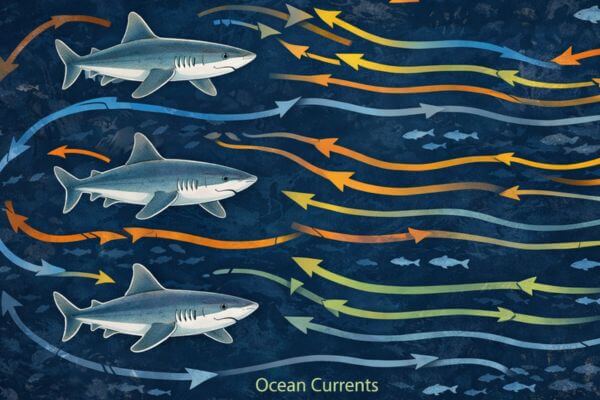
Some shark species migrate from one location to another at certain times of year to locate a source of food, to mate, or to give birth. Migrating is a vital part of the shark’s life cycle and essential to their survival in an ocean ecosystem. Sharks do not migrate randomly; they move in response to changing environmental conditions (such as seasonal changes) and to basic needs, such as feeding and mating. As prey species shift to new locations in response to seasonal changes, many shark species will migrate to follow them to reliable food sources. In addition, some shark species migrate to warmer, safer waters to mate and pup, giving their pups a better chance to grow and develop. The water temperature is also a factor in shark migration, as they need to maintain a specific temperature range to function biologically. Migration allows sharks to avoid overcrowding and competition. Furthermore, sharks use ocean currents to conserve energy when travelling large distances. Overall, the migratory behaviour of sharks demonstrates how effectively they adapt to their environment and respond to factors such as food availability, temperature, and ocean currents. The migration of sharks helps maintain a balance between their populations and marine ecosystems.
Sharks Migration Patterns and Seasonal Ocean Changes
The migrations of many shark species are influenced by predictable seasonal changes in their environment, including temperature and prey availability in the ocean. Sharks tend to move closer to shore during the summer months because warm water is usually a location for prey to be found. As a result, coastal areas become rich in sharks and other predators that take advantage of the abundant food source. On the other hand, cold surface temperatures during the winter can drive prey species further away from shore or to different latitudes, and some sharks may migrate to deeper or more stable waters where the temperature remains constant or at least less variable than it would be closer to shore. This seasonal movement has a significant effect on the distribution of sharks along the coast of South Africa, as changes in currents, temperature and prey all affect their migration to different locations throughout the year.
How Far Can Sharks Migrate?
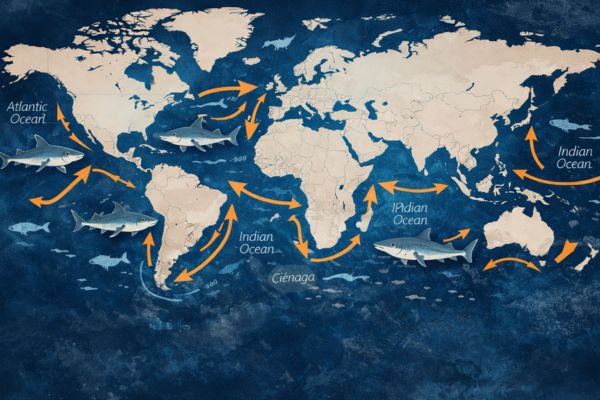
Some sharks are capable of astonishing long-distance migrations, travelling thousands of kilometres across the open ocean. Tracking studies have shown sharks crossing entire ocean basins, with some moving from Africa to Australia, while others travel from California to Hawaii or between distant island groups. These journeys often take place far offshore and over many years, revealing consistent migration routes and seasonal patterns. By moving between deep-sea feeding areas and distant habitats, sharks demonstrate advanced navigation skills, using ocean currents, temperature changes, and environmental cues to travel efficiently across vast marine landscapes.
How Do Sharks Navigate During Migration?
One of the most fascinating questions in marine science is how sharks know where to go during long migrations. Researchers believe sharks rely on a combination of natural navigation tools that work together rather than a single sense.
Sharks may navigate by:
- Sensing Earth’s magnetic field, giving them a built-in compass
- Using ocean currents to travel efficiently and conserve energy
- Reading the sun’s position and light patterns near the surface
- Following scent and chemical cues carried through seawater
- Remembering migration routes, refined over time through experience
By combining these signals, sharks can return to the same feeding, breeding, and migration routes year after year, demonstrating remarkable precision and spatial memory across vast ocean distances.
How Scientists Study Sharks’ Migration Patterns
Modern science has transformed our understanding of shark movement.
Common shark tracking methods
- Satellite tags stuck on fins.
- Snap a picture of fish fins – each one differently marked.
- Environmental DNA (eDNA) sampling
- Scientists now track shark movements using such software, revealing where they live and travel. Tools like these reveal hidden patterns in behaviour across oceans. Protection efforts gain clarity when guided by data from these programs.
- One trustworthy source for learning about sharks moving across oceans is the National Oceanic and Atmospheric Administration (NOAA). This organisation makes scientific information about marine life available online to everyone. Its work focuses on understanding sea ecosystems, not selling trips or promoting travel.
Do All Shark Species Migrate?
Some sharks travel long distances across entire oceans. This is because they follow food sources, temperature changes, and reproduction routes.
These sharks can be called highly migratory sharks, and examples of this are as follows:
- The great white shark
- The tiger shark
- The blue shark
- The whale shark
These sharks have been tracked travelling across entire ocean basins and have returned to the exact same area on multiple occasions in a single year.
There are other types of sharks that live in a more predictable environment than highly migratory sharks. The main characteristics of less migratory sharks include:
- Reef sharks (sharks that live on reefs)
- Bottom-dwelling sharks (those that live at the bottom of the ocean)
- Coastal sharks (the sharks that live in an environment with a relatively stable climate).
Although less migratory sharks do not migrate as far as highly migratory sharks, they still migrate short distances when seeking food, following changes in water temperature, or responding to environmental shifts.
Sharks Migration Patterns Along The South African Coast
South Africa plays a significant role in global shark migration patterns due to the specific ocean environment surrounding the country.
South African coastal waters are critical in the global migration route system due to the following factors:
- A convergence of warm and cold oceanic currents
- Extremely productive marine ecosystems (in terms of both biomass and diversity)
- Seasonal fish migrations, which draw large numbers of predator species into the same area
- Important feeding and reproduction grounds for many shark species
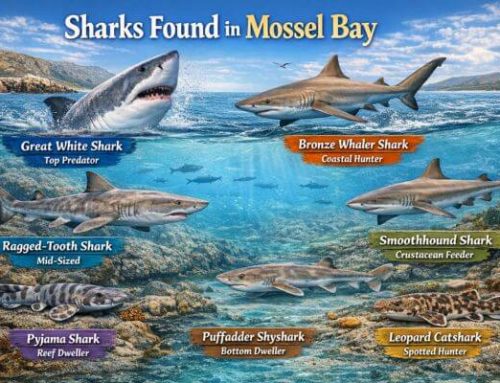
Sharks migrating along the coast of the Western Cape typically travel with schools of fish and warmer-water currents through sections of their migration route, for example, past Mossel Bay, as part of their overall migration pattern. In addition to tourism-related interests, this area is also an extremely important site for marine research and conservation projects, as well as studies on the migratory patterns of sharks, and is therefore likely one of the most important areas in the Southern Hemisphere to study sharks.
Factors Influencing Changing Migration Patterns
- Rising ocean temperatures
- Shifts in prey distribution
- Overfishing
- Habitat destruction
- Increased human ocean activity
Sharks now shift their journeys; some move out sooner, roam longer distances, and others follow new paths than before. Such shifts hint at deeper problems within marine systems.
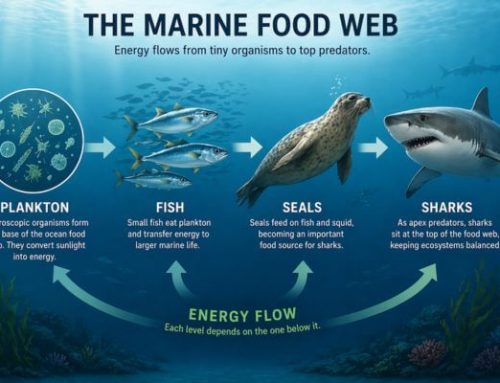
Sharks are apex predators, meaning they sit at the top of the food chain.
Healthy shark migration helps:
- Control prey populations
- Prevent overgrazing of reefs
- Maintain balanced marine ecosystems
- Support biodiversity
Sharks vanish from key migration paths, throwing entire systems out of balance. By tracking how sharks move, researchers gain clues on when nature’s balance might break.
How Shark Migration Research Helps Conservation
Migration data helps scientists and policymakers:
- Identify marine protected areas
- Reduce bycatch in fishing zones
- Protect breeding and nursery grounds
- Monitor climate change impacts
- Educate the public about shark behaviour
Protecting migration routes is just as crucial as protecting coral reefs or coastal habitats.
What Sharks’ Migration Patterns Teach Us
Far beneath the surface, sharks move with purpose through vast waters. Their travels maintain harmony across deep ecosystems, shaping unseen rhythms beneath waves. Survival depends on these steady journeys, not just for one species but for many tied by currents and need. Watching sharks glide across seafloors shows us something quiet but vital: healthy ocean spaces depend on balance, which affects land, too.
Should you want more profound insight into sharks sharing South Africa’s shores, then head over to the main page of Shark Diving Mossel Bay, where you’ll find ongoing details on these creatures, plus how they move through underwater spaces near land.