
The Complete Guide to Shark Diet and Feeding Habits
What do sharks eat? From tiny plankton to fish, squid, rays, and marine mammals, the shark diet is remarkably varied. Different species have evolved different feeding strategies, which is one reason sharks have been so successful for so long.
Sharks have been around for more than 400 million years, and today they occupy a huge range of ocean habitats, from reefs and coastlines to the deep sea and open ocean.

What Do Sharks Eat In The Ocean and How Do They Hunt?
What sharks eat depends on the species, their size, and where they live. Many sharks feed mainly on fish and cephalopods such as squid. At the same time, others also eat rays, crustaceans, marine mammals, seabirds, or even smaller sharks. A few species, including whale sharks and basking sharks, are filter feeders that eat plankton instead of large prey.
Common foods in a shark’s diet include:
- Fish
- Rays and skates
- Squid and octopus
- Crustaceans such as crabs and lobsters
- Seals and sea lions are in some species
- Plankton in filter-feeding species
Sharks hunt using an impressive set of senses. Sharks can detect weak electrical fields from prey, and Smithsonian explains that sharks also use smell, vibration, vision, taste, and other senses to locate food. These adaptations help them find prey in open water, near the seafloor, and even under sand. Once a shark finds prey, the feeding method varies by species. Some sharks bite and tear, some suction-feed, and some filter tiny organisms from seawater. Hammerheads are especially good at finding prey hidden under sand, including stingrays.

What Do Sharks Eat Mainly?
For most shark species, fish are the main part of the diet. Sharks are opportunistic feeders, although some species are more selective. Diet can also change as a shark grows. White sharks, for example, eat different prey at different life stages.
Typical primary diet:
- Bony fish
- Rays and skates
- Squid and other cephalopods
- Smaller sharks in some species
- Marine mammals in some larger species
Some sharks are highly specialised. Hammerheads are famous for feeding on rays, while whale sharks and basking sharks filter plankton from the water.

Why Do Sharks Eat What They Eat?
Sharks eat what gives them the best chance of survival in their environment. Over time, species have adapted to the prey available in their habitats and to the ways their bodies are built to catch and process food. That is why one shark may specialise in bottom-dwelling prey while another filters plankton near the surface. This is an evidence-based inference from their documented diet diversity and habitat use.
In practical terms, sharks tend to target prey they can find efficiently and handle safely. Their senses, teeth, body shape, and hunting style all influence what ends up on the menu.

What Animals Do Sharks Eat?
Across all species, sharks eat a very wide range of animals. Depending on the shark, that can include fish, rays, squid, octopus, crustaceans, sea turtles, seabirds, marine mammals, and other sharks.
Animals commonly eaten by sharks:
- Fish
- Rays and skates
- Squid and octopus
- Crabs, shrimp, and other crustaceans
- Sea turtles in some species
- Seals and sea lions are in some species
- Other sharks in some species
This variety matters ecologically. Sharks, as top or mid-level predators, help maintain balance in ocean ecosystems by limiting the populations of the animals they eat.
Do Sharks Eat Other Sharks?
Yes, some sharks do eat other sharks. Smaller sharks can be prey for larger sharks, and some species regularly include smaller sharks in their diet. White sharks, sandbar sharks, bull sharks, and hammerheads are among the sharks documented feeding on other sharks under some conditions.
This is a normal part of ocean food webs, not something unusual. It can happen due to differences in size, opportunities, prey availability, or simple predator-prey overlap within the same habitat.

Do Sharks Eat Humans?
Humans are not a normal part of a shark’s diet. The Florida Museum notes that of the more than 500 shark species, only about 30 species have ever been reported to bite humans. The Smithsonian also notes that some surviving bite victims may be released if the shark stops feeding.
Many bites are believed to involve investigation, mistaken identity, or defensive responses rather than deliberate predation on humans. The Florida Museum and NOAA both describe shark bites are rare; sharks sometimes grab humans by mistake.
How Do Sharks Eat Their Food?
Sharks use different feeding methods depending on the species.
Main feeding methods:
- Biting and tearing
- Suction feeding
- Filter feeding
Large predatory sharks use strong jaws and sharp teeth to seize prey. Smaller sharks may suck prey into the mouth. Whale sharks and basking sharks feed by filtering tiny organisms from seawater.
Water entering a shark’s mouth exits through the gills rather than being swallowed as food, helping the shark keep breathing while feeding. Sharks use their gills to filter oxygen from the water.
How Do Shark Teeth Work?
Shark teeth are continuously replaced, which is one of the key reasons these predators are so effective at feeding. Unlike humans, sharks do not have a single permanent set of teeth. Instead, they have multiple rows, and new teeth are constantly moving forward to replace those that are lost. This means a shark is rarely without functional teeth.
Tooth shape varies depending on diet. Some sharks have sharp, serrated teeth designed for slicing through flesh. In contrast, others have flatter, crushing teeth suited to hard-shelled prey like crustaceans. Filter-feeding species, such as whale sharks, do not rely on large cutting teeth at all, as they feed on tiny organisms in the water.
This continuous replacement system is also why situations like when a shark loses all its teeth are extremely rare. Even if a shark loses several teeth at once, new ones quickly shift into place. However, if this replacement process were disrupted by injury or illness, the shark could struggle to catch prey and, in extreme cases, risk starvation.
How Often Do Sharks Eat?
There is no single feeding schedule that applies to all sharks. How often a shark eats depends on species, body size, metabolism, habitat, and food availability. Sharks can sometimes go for extended periods without feeding, and one observed swell shark fasted for a very long time.
In general, larger predatory sharks may eat less often than smaller sharks, especially when they consume bigger meals. That pattern is consistent with the broad diversity in shark biology and feeding strategies described by NOAA and the Smithsonian.
How Much Do Sharks Eat?
The amount sharks eat varies enormously by species. A large predatory shark and a plankton-feeding whale shark do not eat in the same way or in the same quantities. Whale sharks, for example, feed on plankton and fish eggs, while white sharks may eat fish, rays, smaller sharks, and marine mammals.
Because shark species are so different, it is safer to keep this section general unless you want to cite exact species-specific studies. The main point is that feeding quantity depends on the shark’s size, prey type, and feeding method.
What Do Different Shark Species Eat?
Different shark species have very different diets.
Examples of species diets:
- White sharks: fish, invertebrates, rays, smaller sharks, and marine mammals, especially as they grow larger
- Hammerheads: rays, fish, and squid; some are especially effective at finding stingrays under sand
- Whale sharks: plankton and fish eggs
- Basking sharks: zooplankton filtered from seawater
- Oceanic whitetips: bony fish, squid, seabirds, rays, other sharks, and sometimes marine mammals
- Sandbar sharks: bony fish, smaller sharks, octopuses, squid, eels, skates, rays, shrimp, and crabs
That variety is one of the clearest reasons sharks occupy so many different roles in marine ecosystems.
Where Do Sharks Feed?
Sharks feed in many ocean habitats, including coastal waters, reefs, the open ocean, and the deep sea. Smithsonian notes that sharks are found in nearly every ocean habitat, and their feeding grounds usually reflect where their preferred prey is most abundant.
Coastal waters can be rich feeding areas because fish, rays, turtles, seabirds, and marine mammals may all be concentrated there. Reef habitats also support abundant prey. Open-ocean species often follow pelagic prey such as fish and squid.
When Do Sharks Eat?
Feeding time varies by species and prey. Some sharks hunt in low light, some feed by day, and some may feed whenever prey is available. The Smithsonian specifically notes that there is no simple, universal pattern: not all sharks feed at dawn and dusk.
A safer general summary is this:
- Some sharks hunt effectively in low light
- Some species feed during the day
- Filter-feeding sharks may feed whenever plankton is available
Where Do Sharks Sit In The Ocean Food Chain?
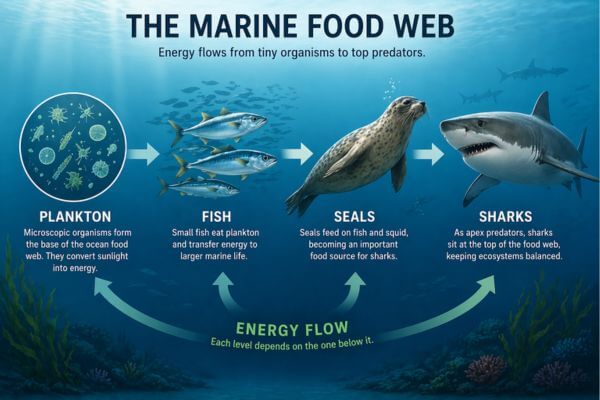
Many sharks are top or mid-level predators in marine food webs. Sharks play an important role in the food web and help ensure balance in ocean ecosystems.
However, it is better not to say that all sharks have no natural predators. Larger sharks can eat smaller sharks, and some sharks may also be preyed on by orcas and other large predators.
Why Are Sharks Important In The Ocean Food Chain?
Sharks help control the populations of the animals they eat, and that can affect the structure of entire ecosystems. NOAA and the Smithsonian both describe sharks as important to healthy oceans because changes in shark numbers can ripple through food webs.
Their role includes:
- Regulating prey populations
- Removing vulnerable animals in some cases
- Supporting overall ecosystem balance
Interesting Facts About What Sharks Eat
A few diet facts that stand out.
- Whale sharks, the largest sharks on Earth, feed on tiny plankton and fish eggs.
- Basking sharks also feed on plankton.
- Some sharks eat other sharks.
- Sharks can replace teeth throughout their lives.
- Tiger sharks are famous for eating a wide range of items, which is why they are often described as broad, opportunistic feeders.
Experience Sharks In The Wild
Understanding what sharks eat gives readers a much better sense of how sharks fit into the ocean. Their diets are diverse, their feeding methods are highly specialised, and their ecological role is important.
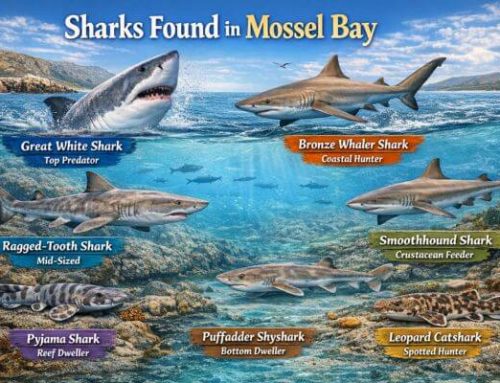
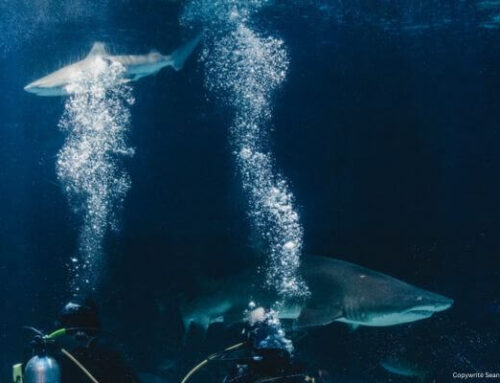
If you want to deepen your understanding, there is nothing quite like seeing sharks in their natural environment. Experiencing shark diving in Mossel Bay allows you to witness these incredible animals up close and gain a real sense of how they behave in the wild.