
Understanding Shark Migration
Far beneath the surface, sharks roam long distances and have practised shark migration year after year. Some cover massive stretches between feeding grounds and breeding spots. Following schools of bait helps guide their path across the open sea. Warmer currents pull them northward when cold sets in elsewhere. Their journeys repeat with each passing season. Without clear maps or compasses, these animals still find ways to traverse vast space. Experts track these movements using trackers and satellite tools. Protecting exact routes matters because survival depends on consistent resources. Each leg of their journey supports life beyond what we see above water.

What Does Shark Migration Actually Mean?
Animals that migrate between different areas of their habitat at specific times of year are known as migratory animals. Sharks migrate between different regions because it enables them to:
- Locate their food sources
- Search for water temperatures that match their needs
- Travel back to their breeding and pupping sites
- Track ocean currents that carry essential nutrients
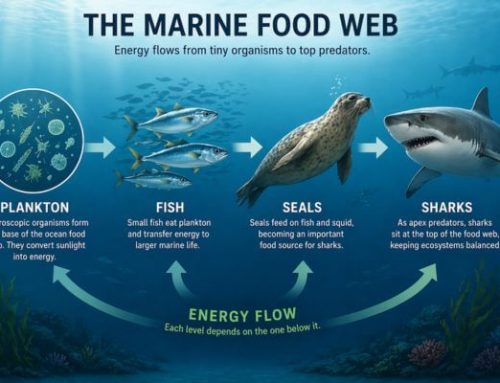
The survival of sharks as apex predators depends on their migration patterns, which maintain healthy marine ecosystems.

The Shark Species With the Longest Migration Ever Recorded
The great white shark takes the crown.
The great white shark (Carcharodon carcharias) remains the species that migrates the farthest, according to scientific records. Scientists have monitored these ocean predators as they cross entire ocean basins while travelling more than 20,000 kilometres.
The great white shark named Nicole made a historic 20,000 km journey from Gansbaai, South Africa, to Western Australia, then returned to her starting point, making it one of the longest fish migrations ever documented.

Why Do Great Whites Travel Such Massive Distances?
Great whites migrate between locations to track their seal and tuna prey, search for warm waters, reach their mating and pupping sites, and explore the Indian Ocean gyres. Great whites undertake long-distance migrations thanks to their robust body structure, including strong muscles and large, oil-filled livers, and to their efficient swimming.

Other Shark Species Known for Impressive Migrations
The great white shark maintains its position as the world’s leading migratory species, but many other shark species also migrate over thousands of kilometres annually.
Whale sharks (Rhincodon typus)
- The species moves between tropical areas where they feed.
- Scientists have tracked these sharks over distances exceeding 12,000 kilometres.
- The sharks follow plankton blooms as they migrate.
- The whale sharks migrate through different ocean basins and national waters during their journey.
Blue sharks (Prionace glauca)
- The species demonstrates the widest distribution among all shark species.
- The sharks migrate through complete ocean territories.
- The sharks track squid and fish schools through cool ocean areas that produce high fish numbers.
Tiger sharks (Galeocerdo cuvier)
- The species moves between tropical and subtropical ocean regions.
- The sharks migrate between different areas based on the availability of their prey.
- Scientists have documented extensive journeys across the Pacific Ocean by these sharks.

Why Do Shark Species With The Longest Migration Travel Across Oceans?
The sharks that migrate across vast distances follow established patterns which stem from their survival instincts and environmental signals that scientists continue to study.
Scientists have not yet fully understood sharks’ navigation abilities.
Sharks navigate through space by using five different navigation systems, which include:
- The Earth’s magnetic field
- Ocean currents
- Water temperature
- Chemical cues
- Memory of past routes
These animals demonstrate exceptional intelligence and operational efficiency as they travel across the animal kingdom.

How Do Marine Researchers Track Migratory Sharks?
Tracking sharks is a fundamental tool for scientists conducting conservation research.
Scientists employ multiple tracking methods, which include:
- Scientists use dorsal fin satellite tags and acoustic tags that emit signals to sensor arrays, and photo-ID methods for species with spot patterns, like whale sharks, and ocean gliders that track tagged sharks.
These tracking systems help scientists identify shark migration patterns, their essential habitats, and locations where sharks are vulnerable to overfishing.
Why Long-Distance Shark Migration Matters for the Planet
The ecological system benefits significantly from sharks, which travel extensive distances during their migrations. Their migration patterns serve three essential purposes:
- The population numbers of their prey species remain under control.
- Nutrient movement occurs between different ecological systems.
- The health of coral reefs and open ocean ecosystems depends on these species.
- The food chain maintains its equilibrium because of these species.
Their position as leading marine predators triggers a chain reaction that affects fish behaviour and reef stability across the entire ecosystem.
Human Threats Facing Migratory Shark Species
The entire ocean migration of sharks does not protect them from significant threats
The main threats to sharks include:
- Longline fishing
- Illegal shark fin trade
- Bycatch
- Habitat degradation
- Plastic pollution
- Ocean temperature changes caused by climate change
Protecting migratory sharks requires international cooperation because they swim through the waters of multiple nations.
Why Long-Distance Shark Migration Matters for the Planet
The long-distance migration of sharks has a significant impact on their ecosystem.
Their migration patterns serve three essential purposes:
- The movement of sharks helps control the numbers of their prey species.
- Shark migration enables the spread of crucial nutrients across different ecological areas.
- Sharks exist in both coral reef ecosystems and open-ocean environments.
- Their position as top marine predators enables them to influence fish behaviour while maintaining reef stability.
Experience the World of Migratory Sharks in Mossel Bay
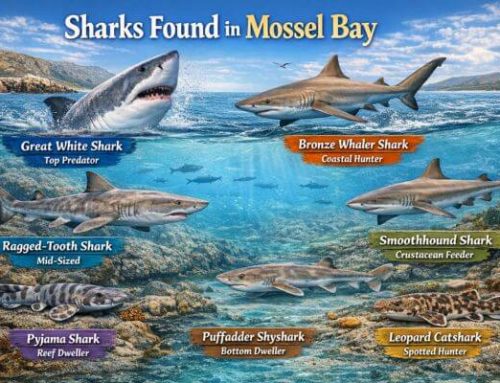
The coastal waters of Mossel Bay, South Africa, serve as a significant migration route for great white sharks. The coastline attracts these top predators because they track their prey as water temperatures and seasonal patterns change. The study of the shark species that migrates the farthest reveals the remarkable nature of these ocean predators.